
Place de la Concorde
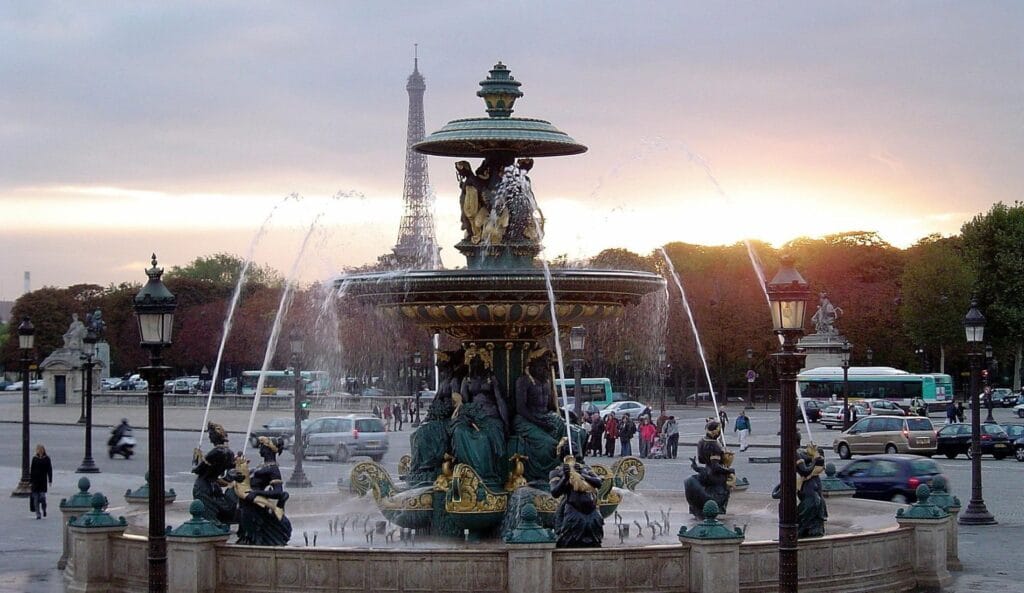
© westcoast_dave via Pixabay.com
Immense, open to the sky and encircled by the symbols of Parisian grandeur, Place de la Concorde is much more than a simple monumental roundabout. It is an open-air history book, a crossroads filled with meaning, where centuries overlap and converse. Standing at the center of this esplanade, you have Paris at your feet—literally and symbolically.
Created in 1755 under the name Place Louis XV, it was first designed to glorify the monarchy. Architect Ange-Jacques Gabriel imagined a vast harmonious space, framed by majestic buildings such as the Hôtel de la Marine. At the center then stood an equestrian statue of the king. But History, capricious as it is, would soon overturn this scene.
In 1793, the royal statue was toppled, replaced by the guillotine. It was here, on this square renamed Place de la Révolution, that Louis XVI, Marie Antoinette, Danton, and more than a thousand others—both famous and anonymous—were executed. The place, so elegant today, still holds within its stones the memory of that time of upheaval and transformation.
In 1795, an effort was made to calm spirits, and the square was renamed Place de la Concorde, as a symbol of reconciliation. A new identity that would endure, despite the tribulations of the 19th century.
The square’s current appearance took shape in the 1830s. The most iconic element? The Luxor Obelisk, a gift from Egypt to France. Over 3,000 years old, it was installed at the center in 1836. Its golden silhouette, rising toward the sky, seems to connect the distant past with the surrounding Haussmannian modernity.
Around it, two monumental fountains inspired by those of St. Peter’s Square in Rome add a touch of balance and freshness. The allegorical statues representing major French cities (such as Lyon, Marseille, or Strasbourg) stand watch at the four corners, motionless yet powerful.
But Concorde is not only to be looked at as a frozen monument: it is lived. To the west, it majestically opens onto the Champs-Élysées. To the east, it leads to the Louvre. To the north, it gives way to Rue Royale and the Church of La Madeleine. Each axis is an invitation to an urban journey.
Today, cars circle it, tourists photograph it, and Parisians often cross it without much notice. Yet pausing for a few moments at sunset, when the obelisk’s gilding catches the light, allows one to touch that rare alchemy: a place where elegance embraces History, without ever betraying it.
