
Musée d’Orsay
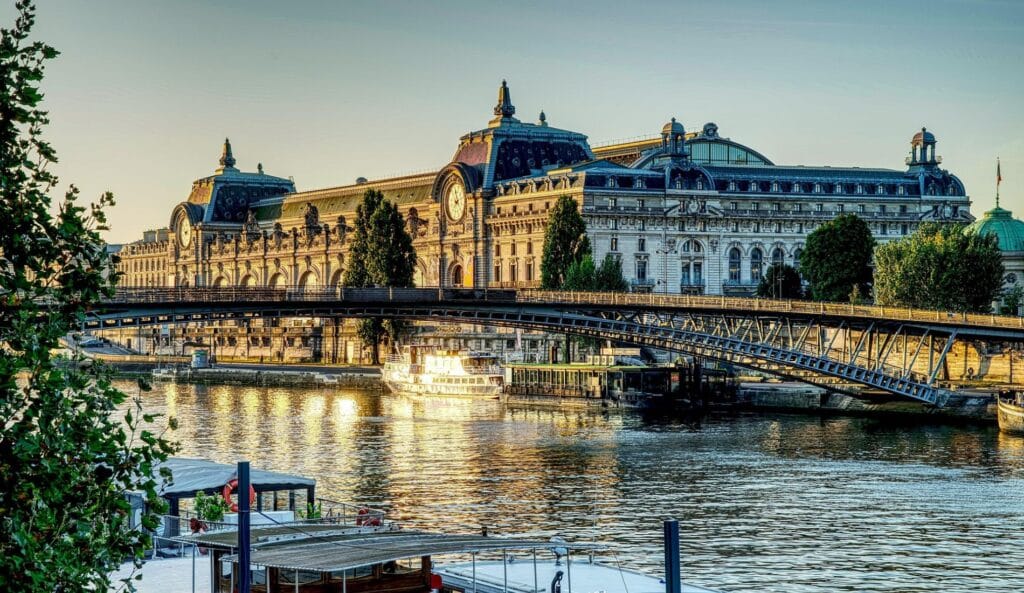
© jpnanterre via Pixabay.com
On the banks of the Seine, facing the Tuileries Garden, stands a majestic building whose history is as fascinating as the masterpieces it houses. The Musée d’Orsay, set in the former train station of the same name, is much more than a museum: it is a sensory journey into Western art between 1848 and 1914. For Impressionist painting enthusiasts, it is a true promised land. For the curious, it is an invitation to discover a Paris bubbling with ideas, images, and passions.
Built for the 1900 World’s Fair, the building was originally an ultramodern train station, directly connected to the southwest of France. But as trains grew larger, the station became too narrow. It was decommissioned in the 1970s and nearly disappeared, until an ambitious project was born: to transform this industrial space into a setting for the arts. The gamble was bold, but the magic worked. Today, the former tracks have become museum aisles, and the great nave, bathed in natural light, exalts the sculptures like a cathedral exalts divine light.
What distinguishes the Musée d’Orsay is the coherence of its collection. Here, the visitor is invited to explore the second half of the 19th century in all its complexity: from Courbet’s realism to Fauvist daring, passing through the elegance of Art Nouveau. But it is above all the Impressionists who draw the crowds. Monet, Manet, Renoir, Degas, Pissarro, Sisley, Cézanne… Their names sound like familiar music, and their carefully displayed canvases tell the story of a vibrant Paris, bathed in light, in constant transformation.
One of the most moving treasures remains Courbet’s “The Origin of the World“, whose presence continues to fascinate and divide. Just nearby, one marvels at Degas’ graceful dancers or Renoir’s ballroom scenes. The paintings vibrate, the colors breathe, and every step through the museum reveals an era in turmoil, between technological progress and social upheaval.
But Orsay does not merely present masterpieces. It stages them. The space, designed by architect Gae Aulenti, plays with volumes, perspectives, and contrasts. It is not uncommon to see visitors who, around a staircase or a corridor, stop in awe before a grandiose perspective over the Seine or an unexpected architectural detail.
On your way out, don’t forget to take a look at the gigantic glass clock on the top floor. It offers a poetic view of Paris, as if time itself had paused. A nod to the former train station, and a powerful symbol: here, the past continues to resonate in the present.
